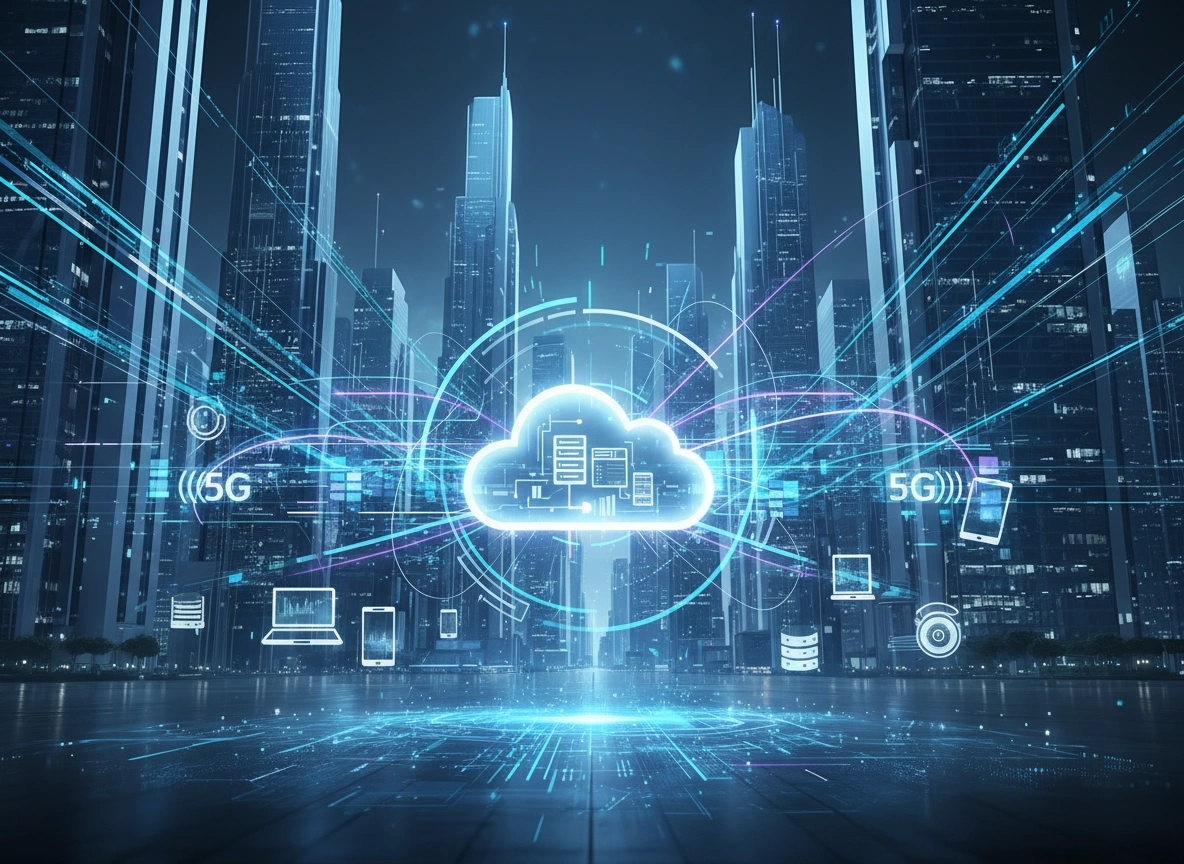
The evolution of wireless technology has consistently reshaped how we interact with the digital world. The latest leap forward, 5G, promises more than just faster downloads; it is fundamentally altering the architecture of our digital infrastructure. One of the most significant areas feeling this transformation is cloud computing. The synergy between 5G and the cloud is creating a powerful new paradigm, enabling services and applications that were previously confined to the realm of science fiction. This article explores the profound impact of 5G on cloud computing, from speed and latency to the rise of edge computing and the Internet of Things (IoT).
At its core, the relationship is symbiotic. Cloud computing provides the centralized processing power and storage, while 5G delivers the high-speed, low-latency connectivity needed to access those resources from anywhere, in near real-time. This combination unlocks unprecedented potential, moving intelligence closer to where data is generated and action is needed. We will examine the opportunities this creates, the challenges that must be overcome, and how this partnership is redefining what’s possible.
Supercharging Speed and Slashing Latency
The most talked-about features of 5G are its incredible speed and ultra-low latency. While 4G offered significant improvements over its predecessors, 5G represents a quantum leap.
From Milliseconds to Microseconds
5G networks are designed to achieve theoretical peak speeds of up to 10 gigabits per second (Gbps), making them over 100 times faster than 4G. This raw speed dramatically accelerates data transfer between devices and the cloud. Large datasets, high-resolution video, and complex models can be uploaded and downloaded in a fraction of the time, boosting productivity and enabling more robust cloud-based applications.
However, the more revolutionary aspect is the reduction in latency. Latency is the delay between sending a signal and receiving a response. 4G networks typically have a latency of around 50 milliseconds. 5G aims to reduce this to as low as 1 millisecond. This near-instantaneous response time is critical for applications where even a tiny delay can have major consequences. For cloud computing, this means the experience of using a cloud-based application can become indistinguishable from using one running locally on a device.
The Rise of Edge Computing
Perhaps the most significant impact of 5G on the cloud is its role as a catalyst for edge computing. Traditional cloud computing relies on a centralized model where data is sent to distant data centers for processing. This model works well for many applications, but the latency involved makes it unsuitable for time-sensitive tasks.
Edge computing flips this model on its head. It brings computation and data storage closer to the sources of data generation. Instead of sending raw data to a centralized cloud, processing occurs on-site or at a nearby “edge” server.
How 5G Enables the Edge
5G acts as the connective tissue that makes edge computing practical on a massive scale. Its high bandwidth and low latency allow for rapid communication between end-user devices and local edge nodes. This enables a hybrid model where initial, time-critical processing happens at the edge, and only the results or more complex workloads are sent to the central cloud for long-term storage and analysis.
For example, in a smart factory, 5G-connected sensors on machinery can send data to an on-site edge server. The server can analyze this data in real-time to detect anomalies and predict maintenance needs, preventing costly downtime. Without 5G, the delay in sending this data to a remote cloud and waiting for a response would render such real-time control impossible.
This fusion of 5G, edge, and cloud creates a distributed computing environment that offers the best of both worlds: the immediate responsiveness of local processing and the immense power of the centralized cloud.
Revolutionizing the Internet of Things (IoT)
The Internet of Things (IoT) involves a vast network of connected devices, from smart home gadgets to industrial sensors. Before 5G, the growth of IoT was often constrained by the limitations of existing wireless networks, which struggled to support a massive number of simultaneous connections.
Connecting the Unconnected
5G technology is designed for massive Machine-Type Communication (mMTC). It can support up to one million connected devices per square kilometer, a massive increase over 4G. This density allows for the deployment of huge IoT networks in smart cities, agricultural fields, and industrial complexes without network congestion.
When combined with cloud computing, this capability is transformative. Billions of IoT devices can continuously collect data and stream it via 5G to edge or cloud platforms for analysis.
Consider smart agriculture. 5G-enabled drones and soil sensors can gather real-time data on crop health, moisture levels, and pest infestations. This data is processed in the cloud, and the insights are used to automate irrigation systems, precisely target fertilizer application, and optimize harvesting schedules. The result is increased crop yield, reduced waste, and more sustainable farming practices.
New Opportunities and Emerging Applications
The convergence of 5G and cloud computing is a powerful engine for innovation, creating opportunities across numerous industries.
Immersive Experiences (AR/VR)
Augmented Reality (AR) and Virtual Reality (VR) applications demand enormous bandwidth and near-zero latency to create convincing, interactive experiences. 5G makes it possible to offload the heavy computational work to the cloud. A lightweight headset can stream data via 5G to powerful cloud servers, which render complex 3D environments and stream them back to the user in real-time. This can revolutionize gaming, remote collaboration, education, and virtual training.
Autonomous Vehicles
For self-driving cars to become a reality, they need to process vast amounts of data from sensors and communicate with other vehicles and infrastructure (V2X communication) instantly. The ultra-low latency of 5G is essential for making the split-second decisions required for safe navigation. The cloud plays a vital role in processing non-critical data, updating maps, and sharing traffic information across the entire vehicle network.
Telemedicine and Remote Surgery
5G can transform healthcare by enabling high-quality, reliable remote consultations and even remote-assisted surgery. High-definition video streaming allows doctors to diagnose patients from afar. For surgery, a specialist could control a robotic arm from hundreds of miles away, with 5G providing the instantaneous and reliable connection needed to ensure precision and safety. The cloud would securely store patient records and host the sophisticated software platforms required.
Challenges and Considerations
While the potential is immense, the widespread adoption of 5G-powered cloud services also presents challenges.
- Infrastructure Investment: Building out the comprehensive 5G network and edge computing infrastructure required is a massive undertaking that demands significant financial investment from telecommunications companies and cloud providers.
- Security: With billions more devices connected and data flowing between the edge and the cloud, the attack surface for cyber threats expands dramatically. A new, more distributed security model is needed to protect data at every point in the network, from the IoT device to the central cloud.
- Data Management: The sheer volume of data generated by 5G and IoT devices will be staggering. Organizations need robust strategies for managing, processing, and analyzing this data to extract meaningful insights without being overwhelmed.
- Standardization and Interoperability: To realize the full potential of this ecosystem, standards are needed to ensure that devices, networks, and cloud platforms from different vendors can work together seamlessly.
The Future is Connected
The impact of 5G on cloud computing is not just an incremental improvement; it is a fundamental shift in how we design and deliver digital services. By erasing the boundaries of distance and delay, 5G turns the cloud from a centralized destination into a distributed, intelligent fabric that extends to the very edge of the network. This powerful partnership will fuel the next wave of technological innovation, enabling smarter industries, more immersive experiences, and a truly connected world. The journey is just beginning, but it is clear that the fusion of 5G and the cloud will define the digital landscape for years to come.
Please click here for more info.
