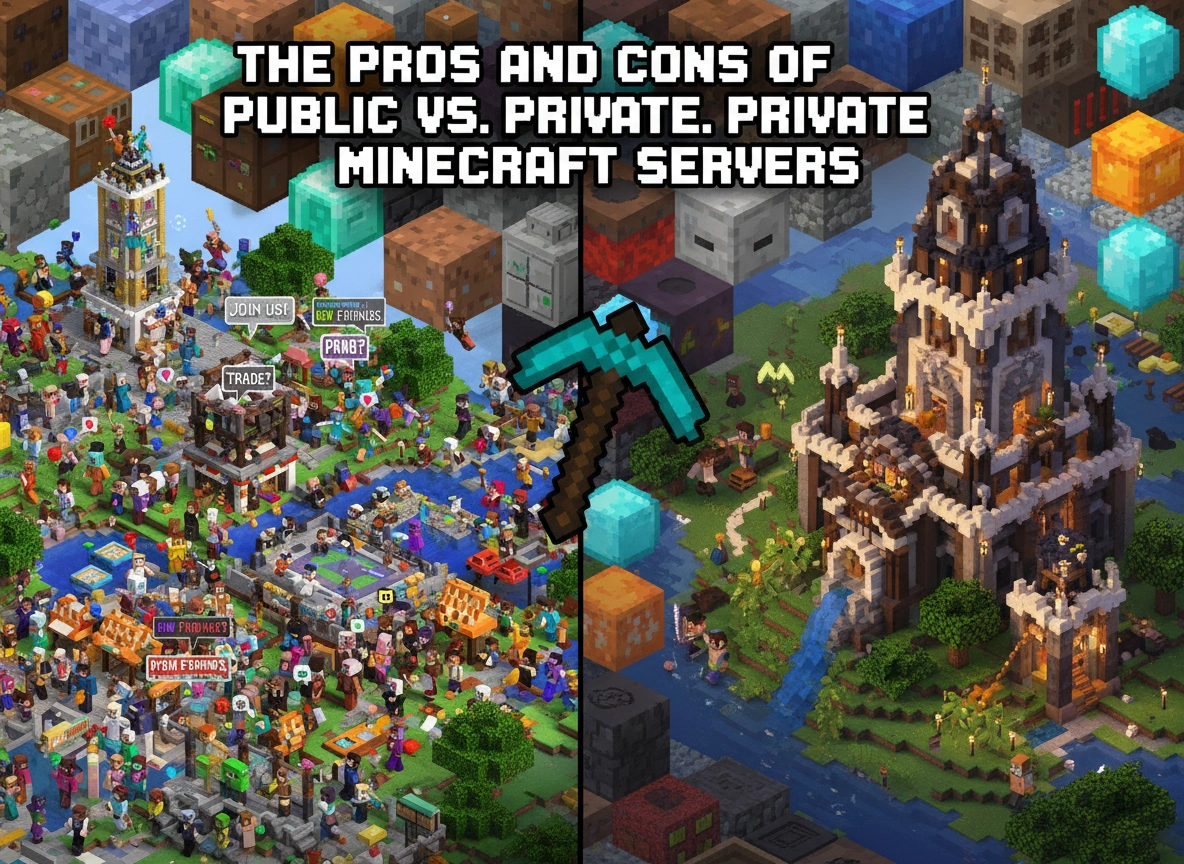
Minecraft remains a cultural phenomenon long after its initial release. While building and surviving alone offers a rewarding experience, the game truly evolves when you introduce multiplayer elements. Joining a server transforms the block-building sandbox into a dynamic, shared universe. However, choosing the right environment to spend your time in requires careful consideration. Players generally face two distinct paths: joining an established public server or creating a private server. Both options provide unique experiences, advantages, and drawbacks. Understanding these differences will help you find the best fit for your play style, technical comfort level, and community preferences.
Understanding Minecraft Servers
A Minecraft server is a player-owned or business-owned platform that allows multiple players to connect and play together in a single world. These servers range from small, intimate spaces designed for a few close friends to massive, intricately coded networks that host thousands of concurrent players. Servers govern the rules of the game, the mods installed, and the overarching community culture.
The choice between public and private servers dictates everything from the type of gameplay you engage in to the people you interact with. Making an informed decision ensures you invest your time—and potentially your money—into a platform that aligns with your expectations.
Public Minecraft Servers
Public servers are open to anyone with a valid Minecraft account. These servers are often massive, commercially run operations with dedicated development teams, moderators, and support staff. Famous examples include massive networks that host a variety of custom game modes.
The Benefits of Public Servers
Instant Access to Large Communities
The most significant advantage of a public server is the sheer volume of players. You log in and immediately surround yourself with hundreds or thousands of other fans. This makes finding groups, engaging in player-driven economies, and meeting new people incredibly easy. If you thrive on social interaction and unpredictable encounters, public servers provide a bustling environment that never sleeps.
Diverse Game Modes and Mini-Games
Public servers often function more like virtual arcades than standard survival worlds. Server administrators develop extensive plugins and custom codes to create entirely new ways to play. You can participate in competitive mini-games, large-scale faction wars, prison escape simulations, or complex role-playing scenarios. This variety keeps the game fresh, allowing you to switch between wildly different experiences without ever logging out of the server network.
Zero Setup and Maintenance
Joining a public server requires no technical expertise. You simply copy the server address, paste it into your multiplayer menu, and connect. The server owners handle all backend maintenance, updates, hardware upgrades, and plugin configurations. Furthermore, most public servers are entirely free to join, meaning you do not have to worry about monthly hosting fees.
The Drawbacks of Public Servers
Lack of Control
When you play on a public server, you play by someone else’s rules. You have no say in which mods are used, when the server resets its world, or how the economy is balanced. If the administration decides to wipe player progress to update to a newer version of the game, you lose your builds and items.
Toxicity and Griefing Risks
Open access means anyone can join, which inevitably brings in bad actors. While large servers employ moderators, keeping a massive community entirely clean is impossible. You may encounter toxic chat, harassment, or players dedicated to destroying others’ creations (griefing). Unless you play in heavily protected zones, your builds might be vulnerable to theft or destruction.
Monetization and Pay-to-Win Mechanics
Running a server for thousands of people is expensive. To cover costs and turn a profit, public servers often rely on microtransactions. While many servers restrict real-money purchases to cosmetic items, others sell powerful gear, exclusive ranks, or in-game currency. This creates an unbalanced playing field where players willing to spend real money gain significant advantages over those who only invest their time.
Private Minecraft Servers
Private servers restrict access to an approved list of players, usually enforced through a whitelist. These servers are typically created by an individual or a small group of friends who want a secluded environment. You can host these on your own computer, rent space from a third-party hosting service, or use the official Minecraft Realms service.
The Benefits of Private Servers
Complete Creative and Administrative Control
Owning or participating in a private server means you and your group dictate the rules. You decide whether the server focuses on cooperative survival, massive creative builds, or hardcore challenges. You can install custom modpacks, adjust game rules, set the difficulty, and dictate exactly how the game functions. This level of control allows you to curate an experience perfectly tailored to your group’s desires.
A Safe, Trustworthy Environment
Because private servers use a whitelist, you know exactly who is playing. This eliminates the fear of random strangers destroying your hard work or stealing your items. You can build expansive, complex structures without needing to hide them or protect them with administrative plugins. The atmosphere is generally relaxed, cooperative, and highly collaborative, fostering strong bonds between players.
Long-Term Stability for Projects
Without the threat of random server wipes dictated by anonymous administrators, private servers are ideal for long-term projects. You can spend months or even years building a massive city, designing complex redstone contraptions, or establishing a thriving automated economy. Your progress remains secure as long as you maintain the server.
The Drawbacks of Private Servers
Financial Costs
Unless you have the hardware and network bandwidth to host a server on your own machine—which requires keeping your computer running constantly—you will need to rent a server. Third-party hosting services and Minecraft Realms require a monthly subscription. The cost increases as you add more players, require more RAM for heavy modpacks, or need better hardware for complex automated farms.
Technical Setup and Maintenance
Managing a private server demands a certain level of technical literacy. While basic vanilla servers are relatively easy to set up, managing a heavily modded server requires troubleshooting crashes, updating plugins, and managing server files through an FTP client. When the game updates, you are responsible for ensuring your server transitions smoothly without corrupting the world save. This maintenance takes time away from actually playing the game.
Risk of Inactivity
Small communities rely on the consistent participation of their members. Because private servers lack the constant influx of new players found on public networks, they can suffer from burnout. If a few key members lose interest or get busy with real-world obligations, the server can quickly feel empty and desolate. Maintaining an active, engaged player base requires effort and organization.
Conclusion
Choosing between a public and private Minecraft server depends entirely on what you want out of the game. Public servers offer a vibrant, chaotic, and endlessly varied experience where you can jump into mini-games and meet thousands of players without spending a dime or configuring a single file. However, you must accept the lack of control, the potential for toxic interactions, and the presence of microtransactions.
Conversely, private servers provide a sanctuary. They allow you to gather your closest friends, curate the exact modpack you want, and build monumental projects in complete safety. The trade-off comes in the form of monthly hosting fees, the burden of technical maintenance, and the responsibility of keeping your small community engaged.
Take a moment to consider your priorities. If you want competitive, fast-paced action and massive social hubs, find a highly-rated public network. If you prefer peaceful, cooperative building and complete control over your virtual world, investing in a private server will provide the rewarding experience you seek. Both avenues offer incredible ways to enjoy the game, ensuring that every player can find their ideal home within the blocky landscapes.
