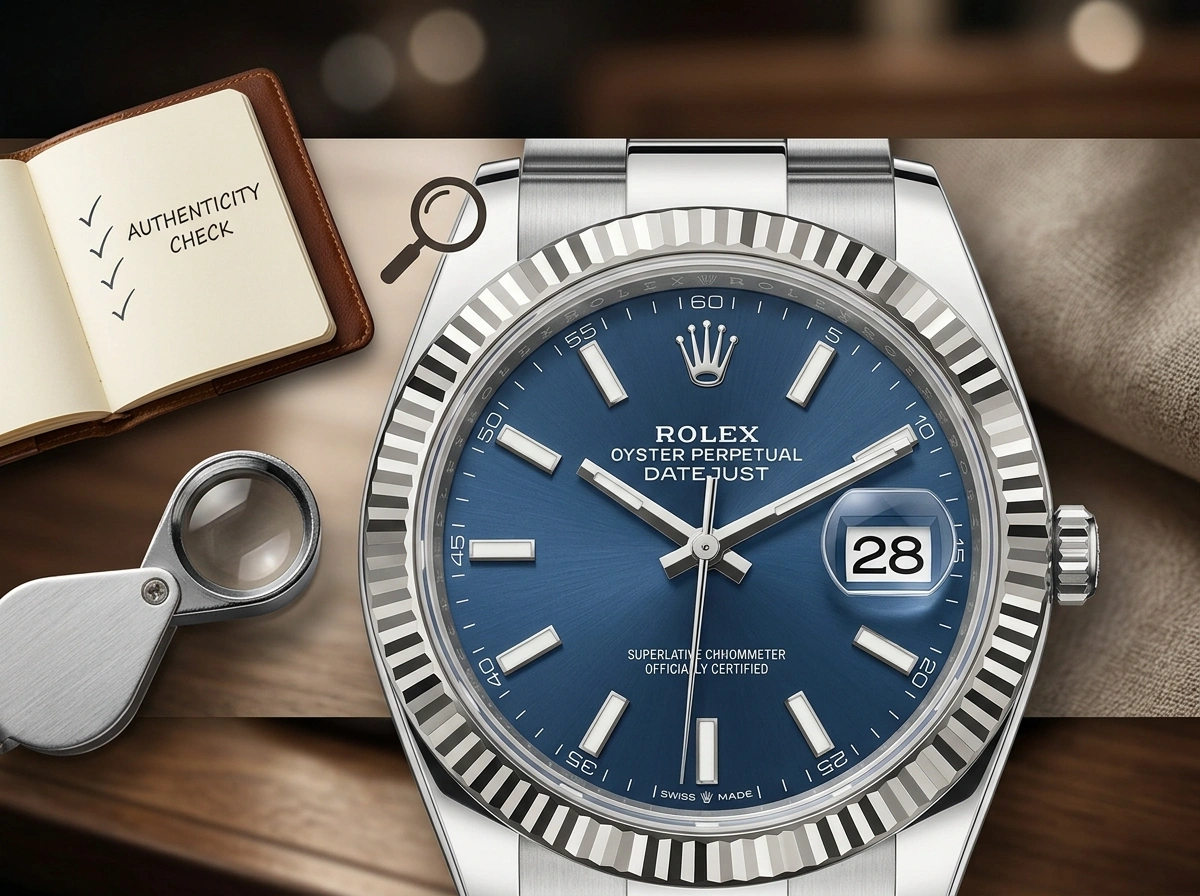
A Rolex is one of the most counterfeited luxury items in the world. As replicas grow more sophisticated, telling a genuine timepiece from a convincing copy takes more than a quick glance. The good news? Authentic Rolex watches carry consistent details that are difficult to reproduce perfectly.
This guide walks you through a clear, step-by-step inspection process. You’ll learn what to examine, what authenticity signals to look for, and which red flags should make you pause before you buy.
Why Careful Inspection Matters
Counterfeit watches have improved dramatically. Some high-end replicas, often marketed as a “super clone” or fake rolex, use better materials and movements than the cheap knockoffs of the past. That makes visual shortcuts unreliable.
Genuine Rolex craftsmanship is built on precision. Every component, from the dial printing to the bracelet links, is finished to exacting standards. The trick to spotting a fake is knowing where authentic quality shows itself, and where counterfeiters tend to cut corners.
Use the checklist below as a layered approach. No single test is conclusive on its own, but together these checks build a reliable picture.
Step 1: Examine the Weight and Feel
Start with what your hands can tell you. Authentic Rolex watches use high-grade 904L stainless steel, solid gold, or platinum. These materials give the watch a substantial, dense feel.
- Heft: A genuine Rolex feels noticeably heavier than its size suggests. Many fakes use lighter alloys and feel hollow or flimsy.
- Balance: The weight should feel evenly distributed across the case and bracelet.
- Finish: Run your fingers over the edges. Real Rolex cases have smooth, refined surfaces with no rough spots or sharp burrs.
If a watch feels surprisingly light or cheap, treat that as an early warning sign.
Step 2: Inspect the Dial Closely
The dial is where craftsmanship is most visible, and where many counterfeits fail. Use a loupe or magnifier for the best view.
What to look for
- Crisp printing: Text on a genuine dial is sharp, evenly spaced, and perfectly aligned. Blurry, smudged, or uneven lettering is a strong red flag.
- The crown logo: Examine the coronet at the 12 o’clock position. On real watches it’s flawlessly shaped and applied. Fakes often have lumpy or poorly defined logos.
- Lume application: The luminous markers should be clean and uniform. Sloppy, overflowing, or discolored lume suggests a copy.
- Cyclops magnification: On models with a date, the cyclops lens magnifies the date by roughly 2.5x. On many fakes, the magnification is weaker and the date doesn’t fill the window properly.
Step 3: Check the Movement
A Rolex is famous for its smooth, sweeping second hand. This is one of the most telling signs.
- Second hand sweep: A genuine movement ticks at a high frequency, producing a nearly continuous gliding motion. Cheaper fakes use quartz movements that tick once per second in a visible, jerky way.
- Listen carefully: Authentic mechanical movements are quiet. A loud ticking sound often points to a low-quality fake.
Keep in mind that better replicas now use automatic movements with smoother sweeps, so don’t rely on this test alone.
Step 4: Read the Engravings and Serial Numbers
Rolex engraves several identifying marks with remarkable precision. These are difficult to fake convincingly.
- Crown on the crystal: Modern Rolex watches have a tiny laser-etched crown logo on the crystal at the 6 o’clock position. It’s nearly invisible to the naked eye and visible only at certain angles.
- Serial and model numbers: On newer models these appear engraved on the rehaut (the inner bezel ring) and between the lugs. The engraving should be deep, clean, and finely detailed.
- Quality of cuts: Genuine engravings look smooth and reflective. Fakes often appear sandy, shallow, or acid-etched.
A handheld loupe is your best friend here. Counterfeit engravings rarely match Rolex’s precision under magnification.
Step 5: Evaluate the Caseback
Here’s a simple rule that catches many fakes: most authentic Rolex watches have a smooth, solid caseback.
- Avoid display backs: With rare exceptions, Rolex does not produce see-through casebacks. If you can view the movement through a clear back, be very suspicious.
- No excessive engravings: Genuine casebacks are typically plain. Decorative logos, model illustrations, or extensive text are common counterfeit traits.
Step 6: Inspect the Bracelet and Clasp
The bracelet reveals a lot about build quality. Counterfeiters often overlook these finer details.
- Solid links: Genuine bracelets feel solid and articulate smoothly. Hollow, rattling links suggest a fake.
- Clasp engraving: The Rolex crown and branding on the clasp should be cleanly stamped or engraved.
- Mechanism feel: The clasp should open and close with a precise, satisfying click. Loose or flimsy clasps are a warning sign.
Step 7: Verify the Documentation and Source
Paperwork supports your inspection but never replaces it. Counterfeit papers exist too.
- Warranty card: Newer cards include security features and a card number that should match the watch.
- Matching numbers: Serial numbers on the documents should align with those on the watch.
- Seller reputation: Buy from authorized dealers or reputable, well-reviewed sellers. A price that seems too good to be true usually is.
Common Concerns Buyers Have
“What if every individual test passes?” Stack your findings. High-quality replicas may pass one or two checks but rarely clear all of them. Inconsistencies across multiple areas are the real giveaway.
“Can I rely on online photos alone?” No. Photos can hide weight, sound, and texture. Whenever possible, inspect the watch in person.
“Should I get professional help?” For high-value purchases, yes. A certified watchmaker or authorized Rolex service center can open the watch and confirm the movement and components. This is the most definitive verification available.
Quick Inspection Checklist
Use this as a fast reference:
- Feels heavy and well-balanced
- Dial printing is sharp and crown logo is crisp
- Cyclops magnifies the date clearly (about 2.5x)
- Second hand sweeps smoothly
- Tiny crown etched on the crystal at 6 o’clock
- Engravings are deep, clean, and precise
- Caseback is solid, not transparent
- Bracelet links feel solid; clasp clicks firmly
- Documentation and serial numbers match
- Purchased from a trusted, reputable source
Final Thoughts
Spotting a fake Rolex comes down to layered, patient inspection. No single detail confirms authenticity, but a watch that passes weight, dial, movement, engraving, caseback, and bracelet checks together is far more likely to be genuine.
Here are your next steps: examine the watch carefully using the checklist above, compare it against reference images of the exact model, and for any significant purchase, have it verified by a certified professional. A little diligence now protects both your money and your peace of mind.
